Concrete Work in Placentia, Explained Before We Pour
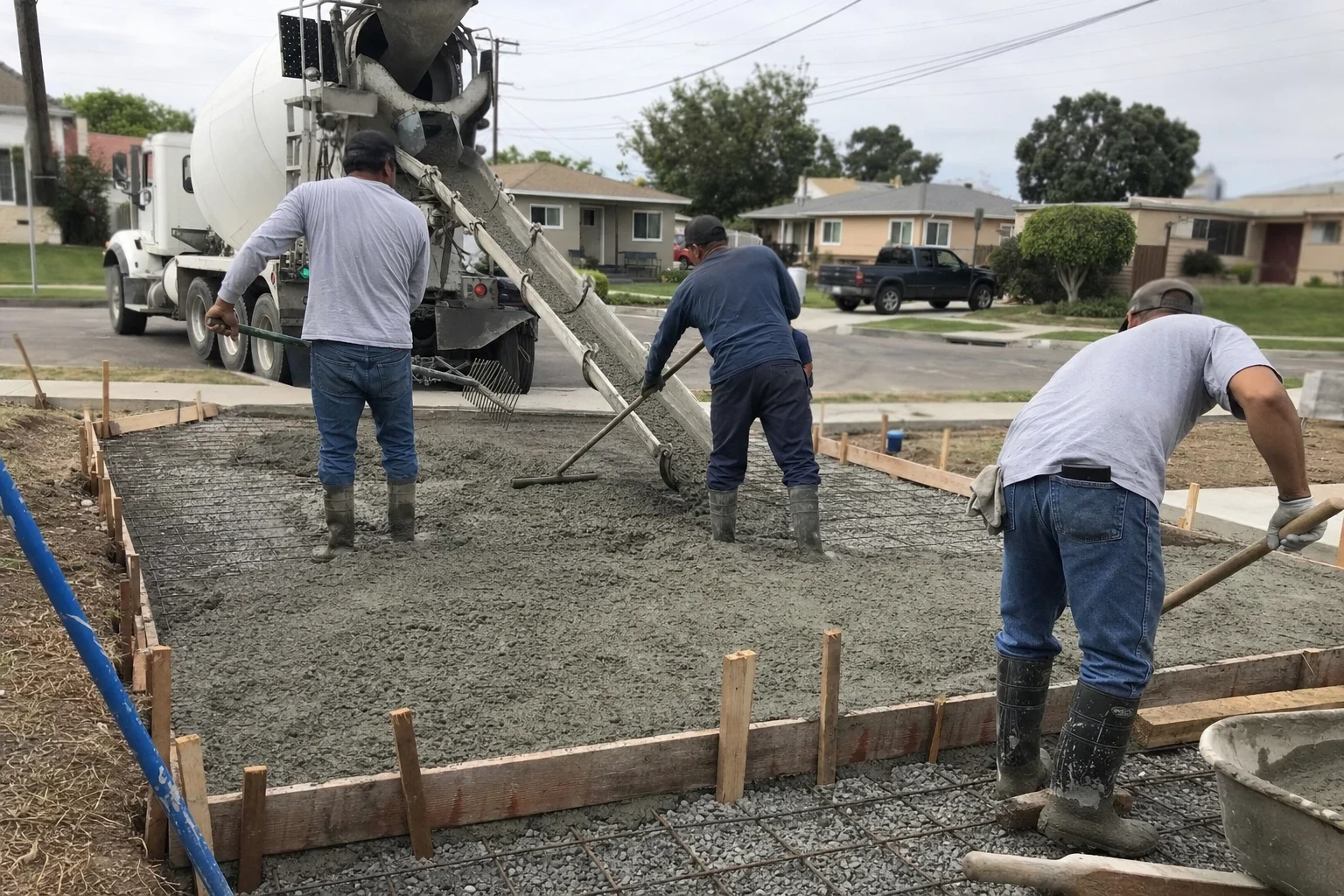
We pour new driveways, patios, stamped concrete, pool decks, slabs, steps and walkways for homeowners in Placentia, Fullerton and Yorba Linda. Before any work starts, we walk your property with you, explain what each option means for your home, and put the scope in writing so you know what you are paying for.
- Written line-item estimates
- Options laid out plainly
- Permits pulled when needed
- Cleanup at day's end
Why Homeowners Hire Us
Concrete is hard to undo once it sets. So we spend the time up front making sure you understand what you are getting.
- 01
We explain the choices in everyday words
Broom finish or stamped. Four inches thick or five. Rebar or wire mesh. We tell you what each one means, what it does to the price, and when it is worth it. Then you decide.
- 02
Checked by the state board
We are licensed by the California State License Board (CSLB). You can look up our status on the board's website before you hire us, and we encourage you to.
- 03
Coverage after the pour
Every job we finish comes with a 1-year warranty. We go over what it covers when we hand you the estimate, so there is no guessing later.
- 04
The base gets as much attention as the surface
Most concrete problems start underneath. We grade, compact and set the subbase properly, plan control joints so cracks land where they should, and slope the surface so water runs away from your home.
- 05
Your property is treated with care
We protect walls, plants and nearby surfaces during the pour, keep the work area tidy, and haul away the old concrete and debris when we tear out.
Concrete Work We Do Around Your Home
Most of our jobs are outside: driveways, patios, backyards, side yards and the walkways that tie them together. We also pour stamped concrete, pool decks, RV parking pads, garage floors, courtyards, steps and stairs, and plain slabs for sheds or equipment. Each service page covers how that job is built, what goes wrong when corners get cut, and what changes the price.
Driveways
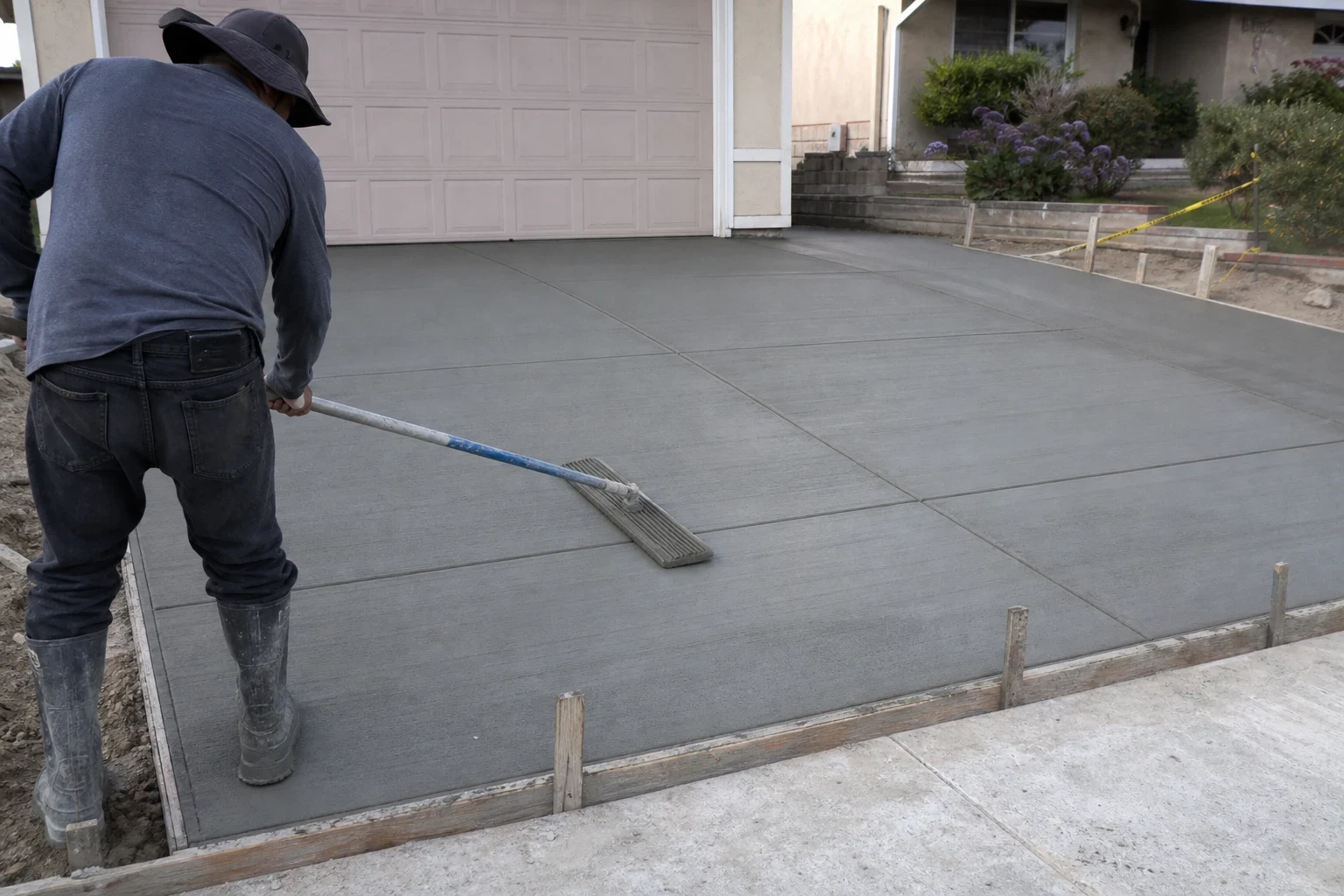
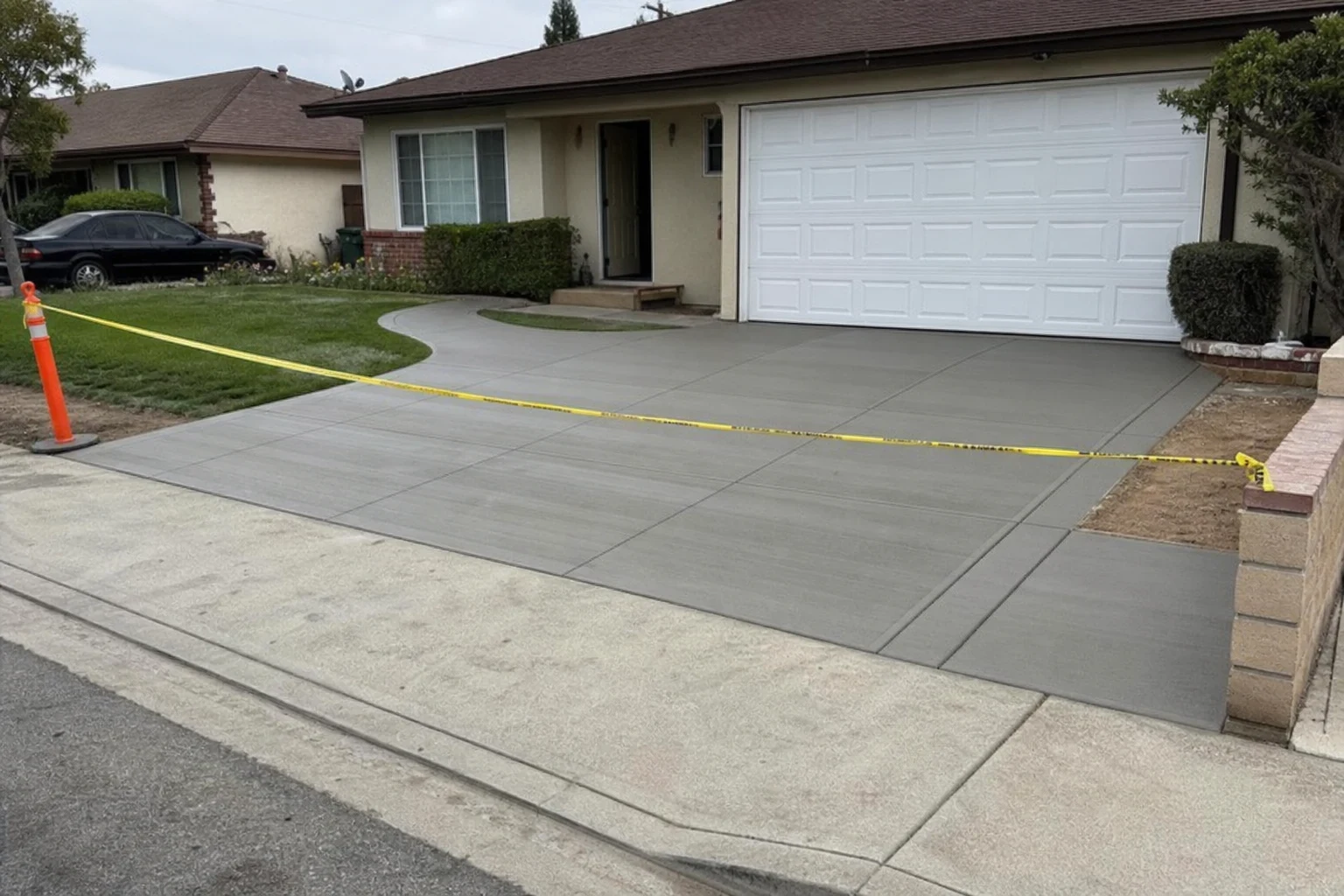
Tear-out and new concrete driveways with the base, thickness, steel and joints explained before you pick an option.
Patios
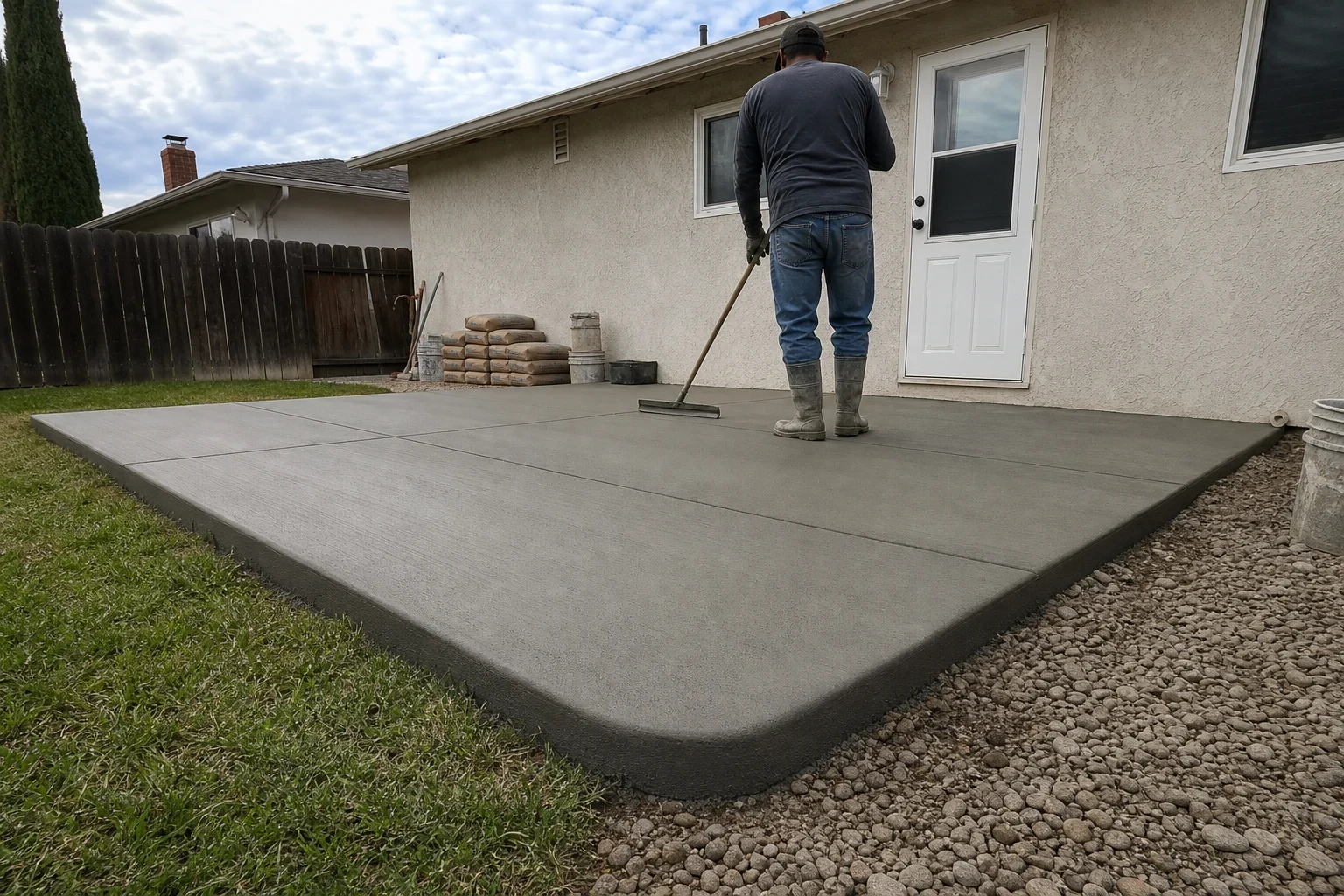
New concrete patios built on a solid base, with finish, slope and joint options explained so you know what you are paying for.
Stamped Concrete
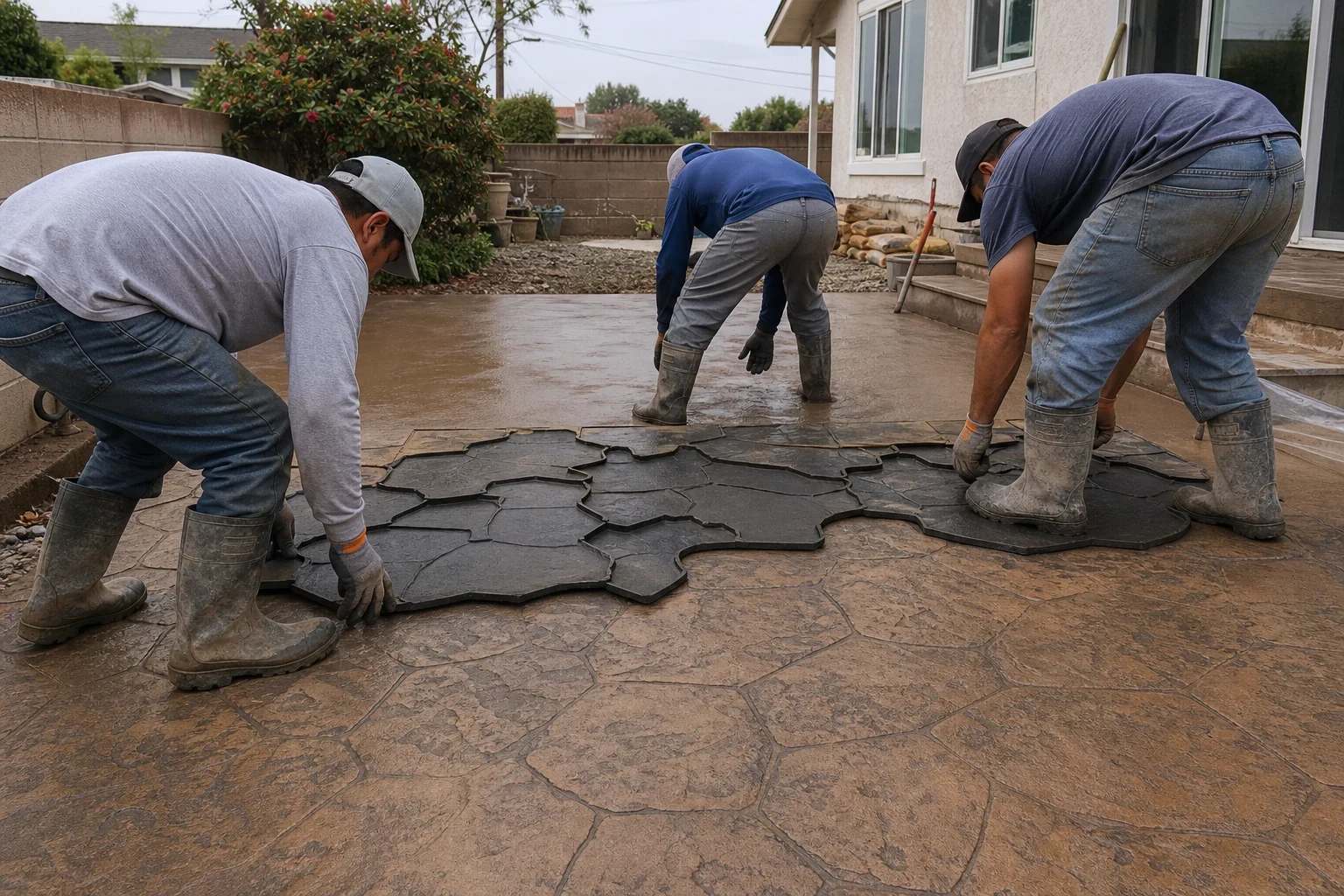
Patterned, colored concrete that looks like slate, stone, brick or wood, with every choice explained before the truck shows up.
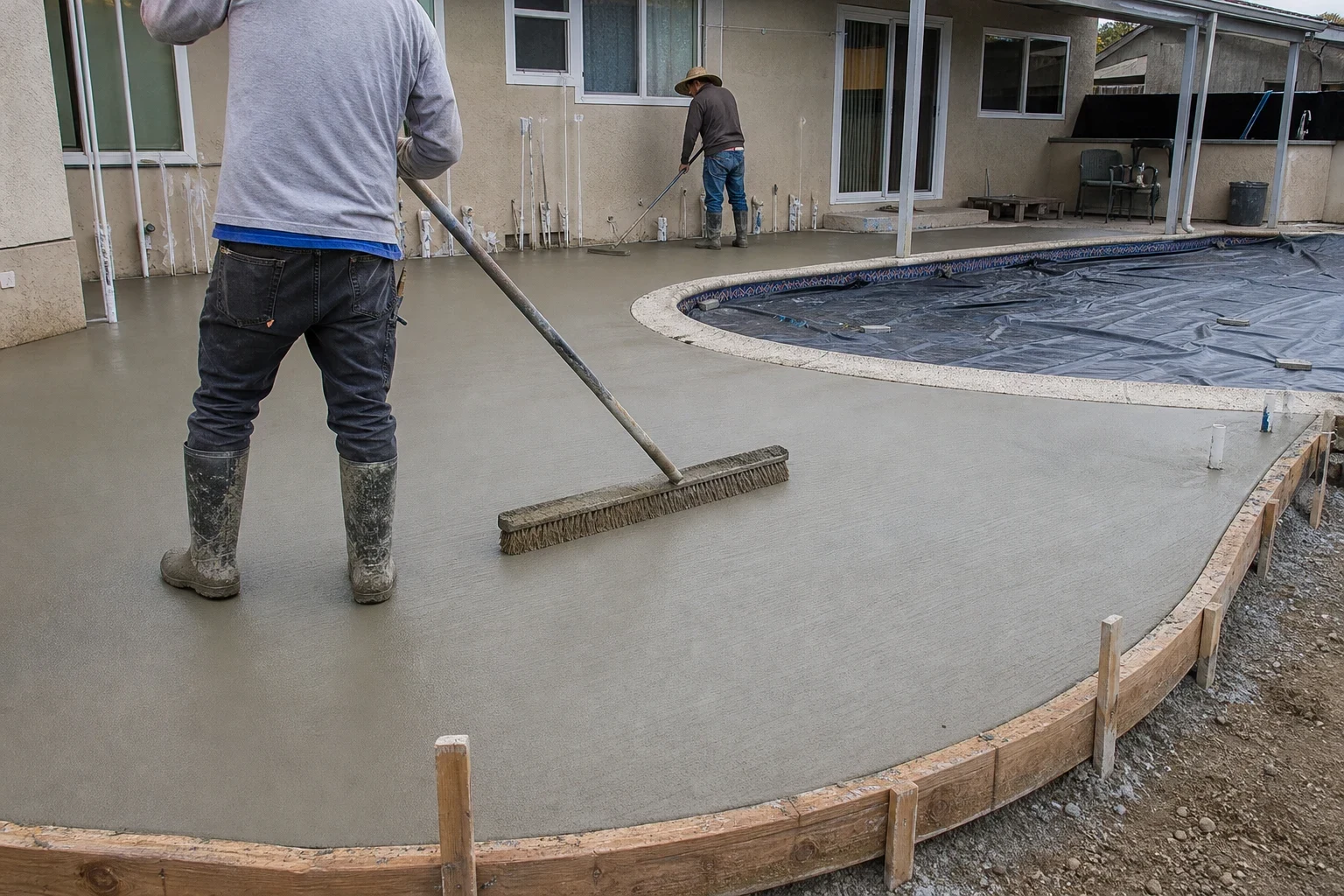
Pool Decks
New concrete around your pool, sloped to drain, finished for grip and bare feet, with each finish option laid out so you can pick with confidence.
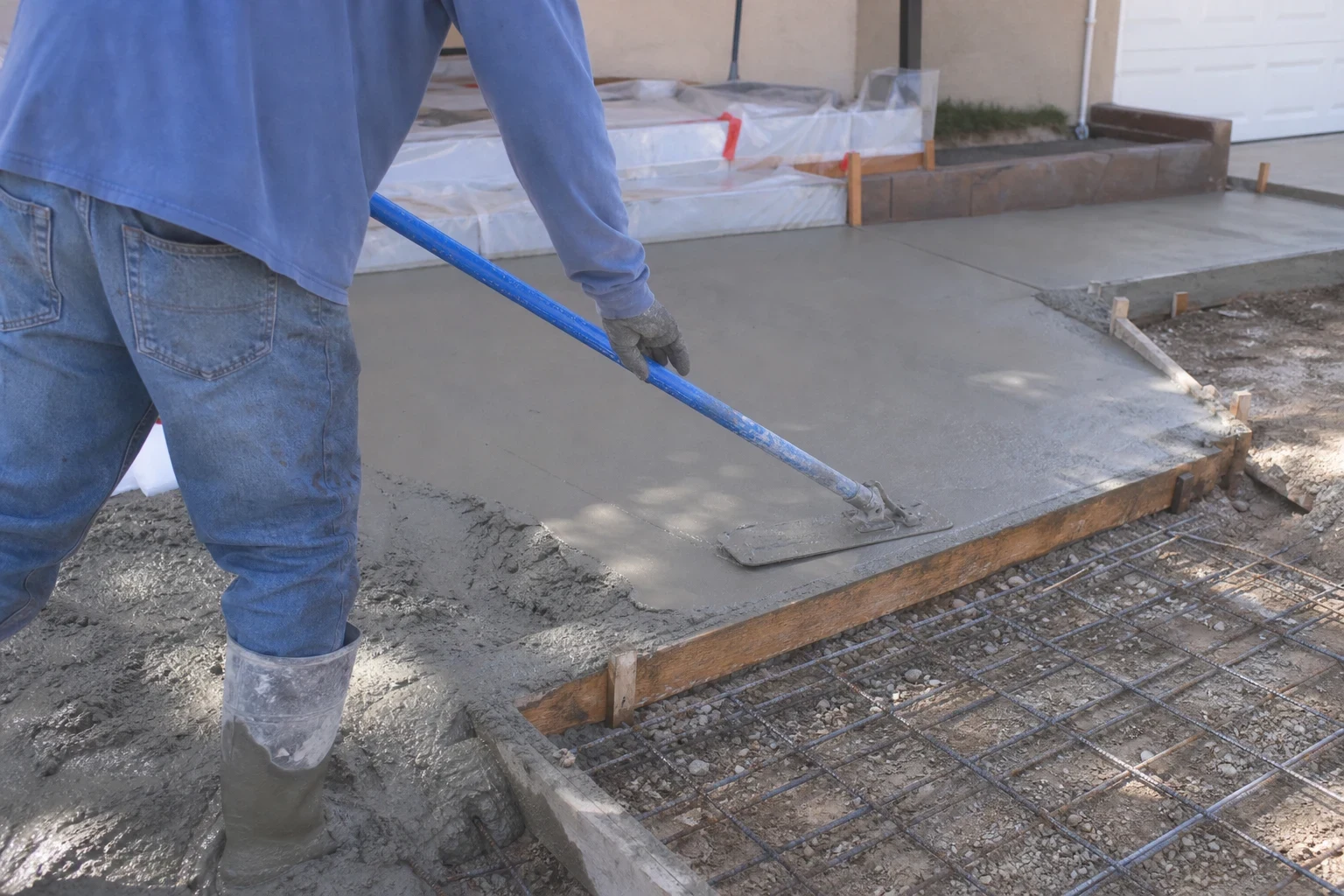
Concrete Backyards
Full backyard concrete planned around slope, drainage and how you use the space, with every option explained before work starts.
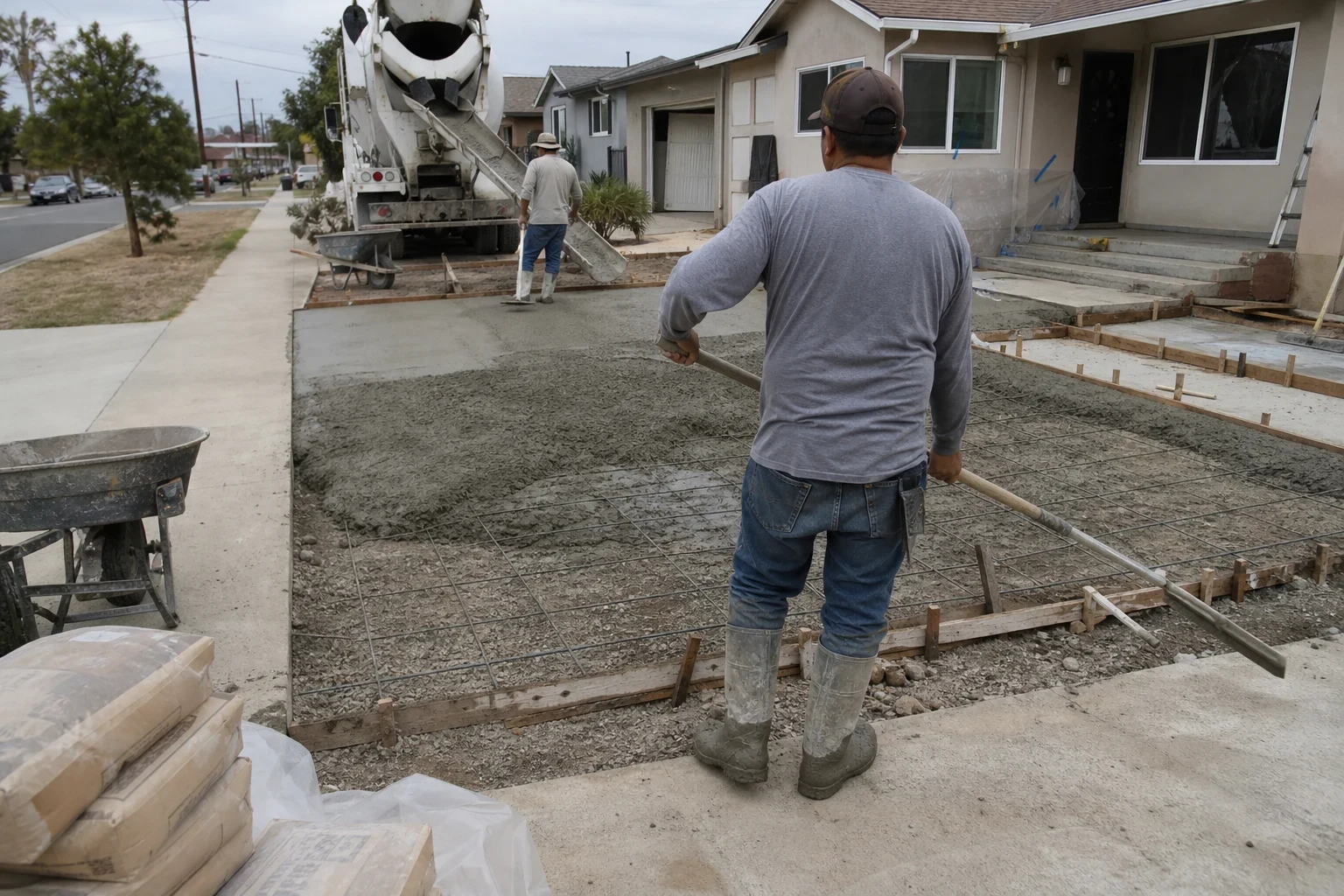
Concrete Slabs
Flat, level slabs for sheds, hot tubs, AC units and workshops, with the right thickness and base for what will sit on them.
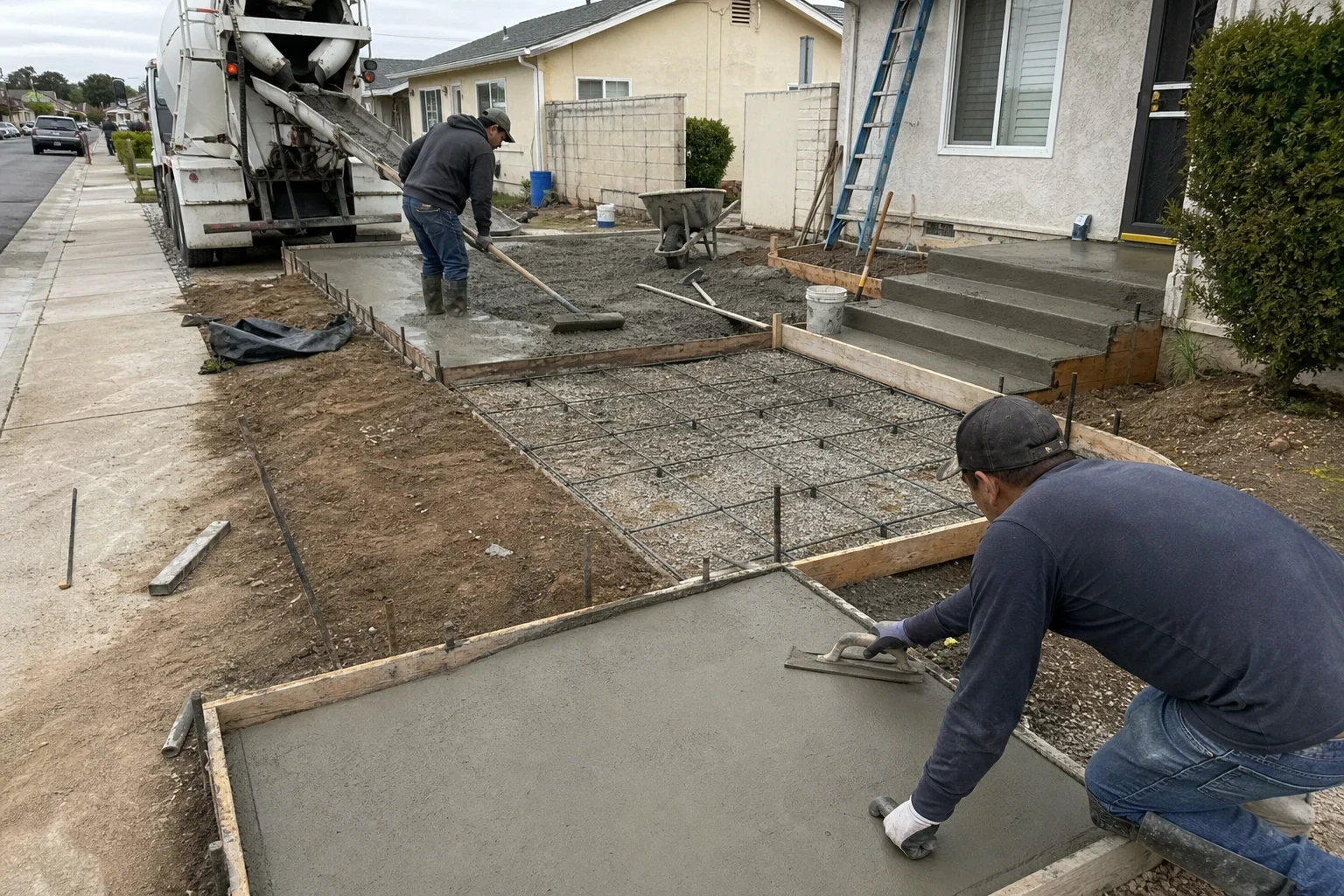
Steps and Stairs
We tear out tired front, back and side-yard steps and pour new concrete stairs with even risers, a grippy finish and a proper landing.
Side Yards
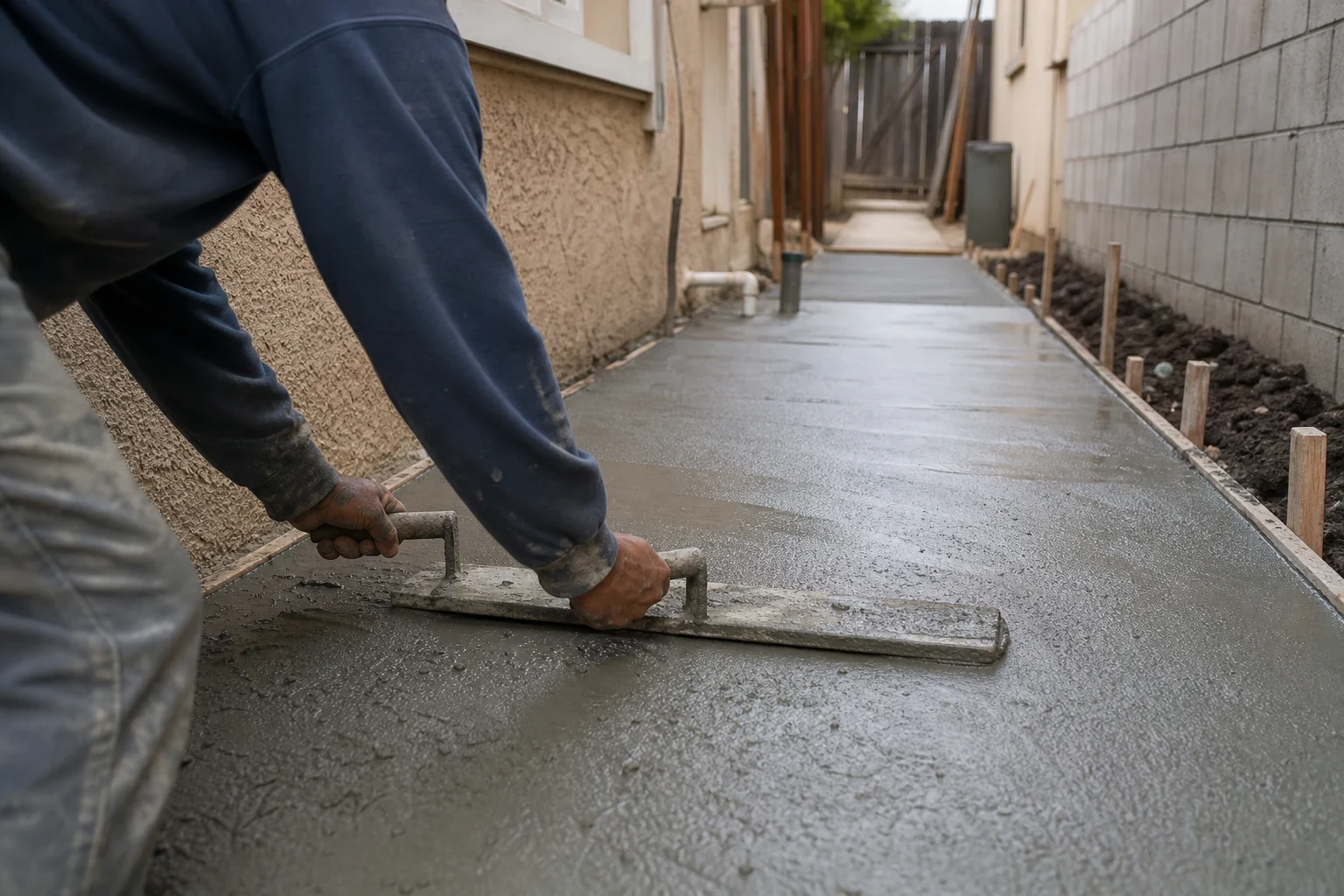
Turn the muddy strip beside your house into a clean, sloped slab that sheds water, holds your trash cans and gets you to the backyard dry.
RV Parking Pads
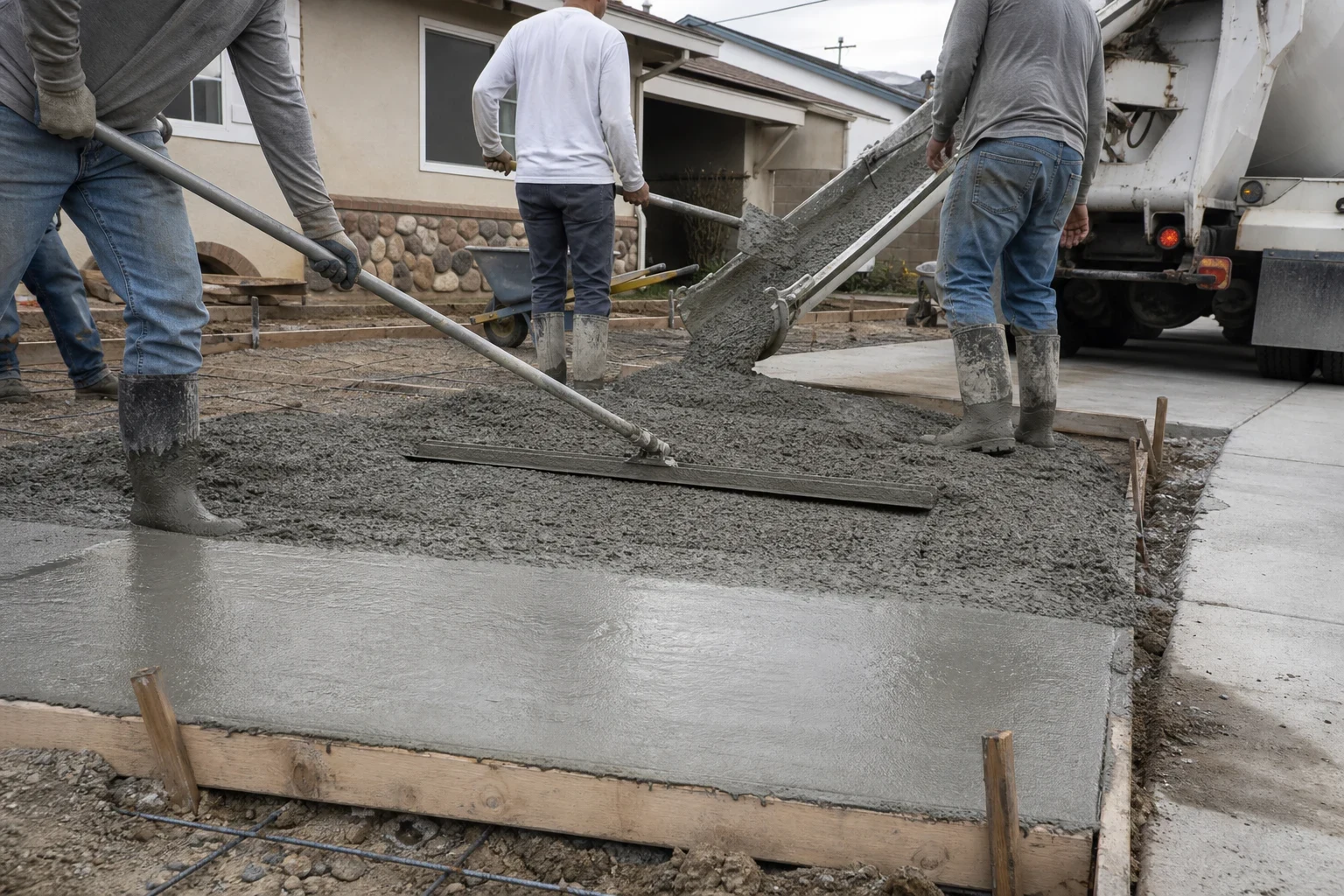
A level, reinforced concrete pad sized for your rig and its slide-outs, so it stops sinking into gravel or tearing up the lawn.
Garage Floors
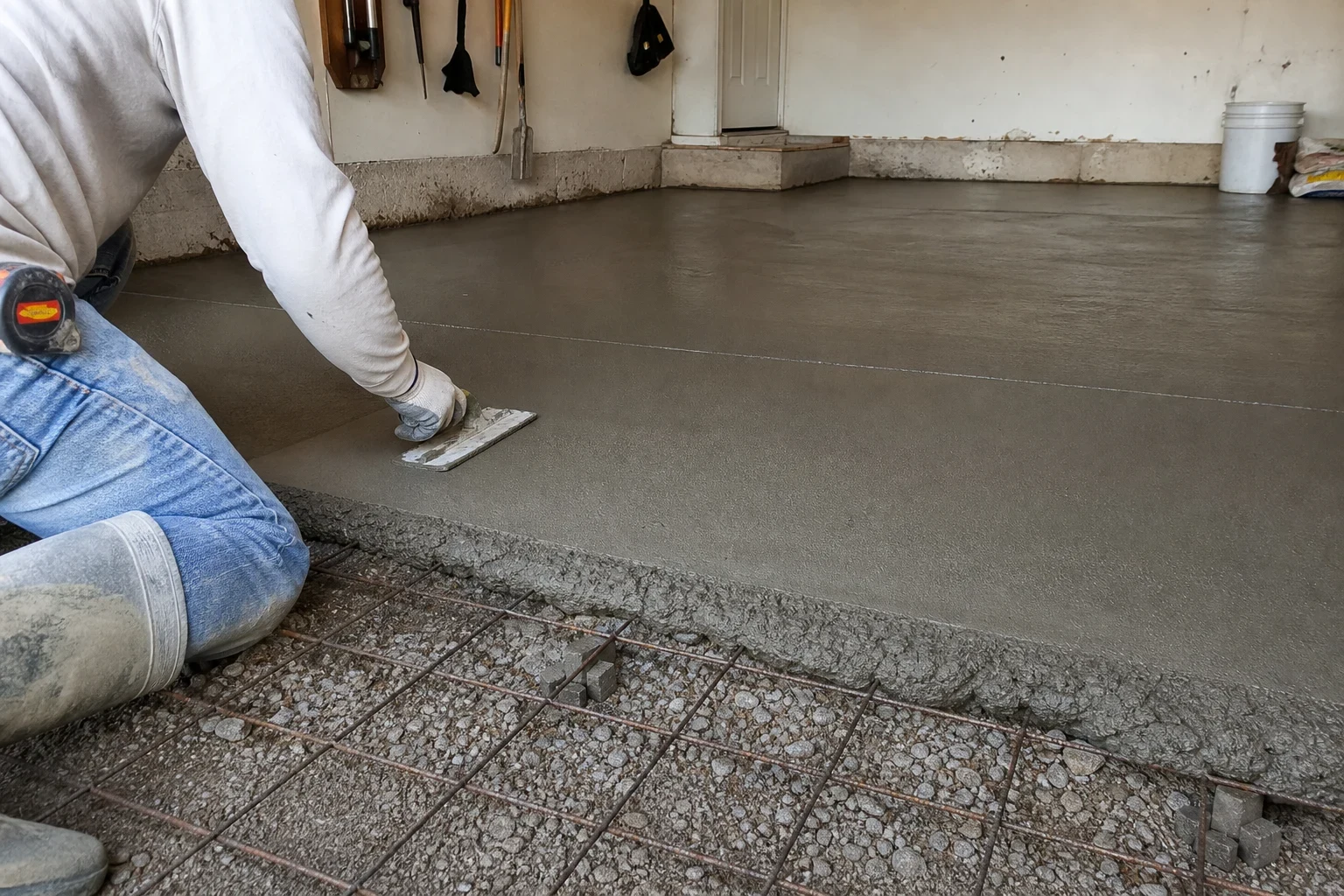
We tear out a worn garage slab and pour a new one with a solid base, proper slope and a finish that suits how you use the space.
Concrete Courtyards
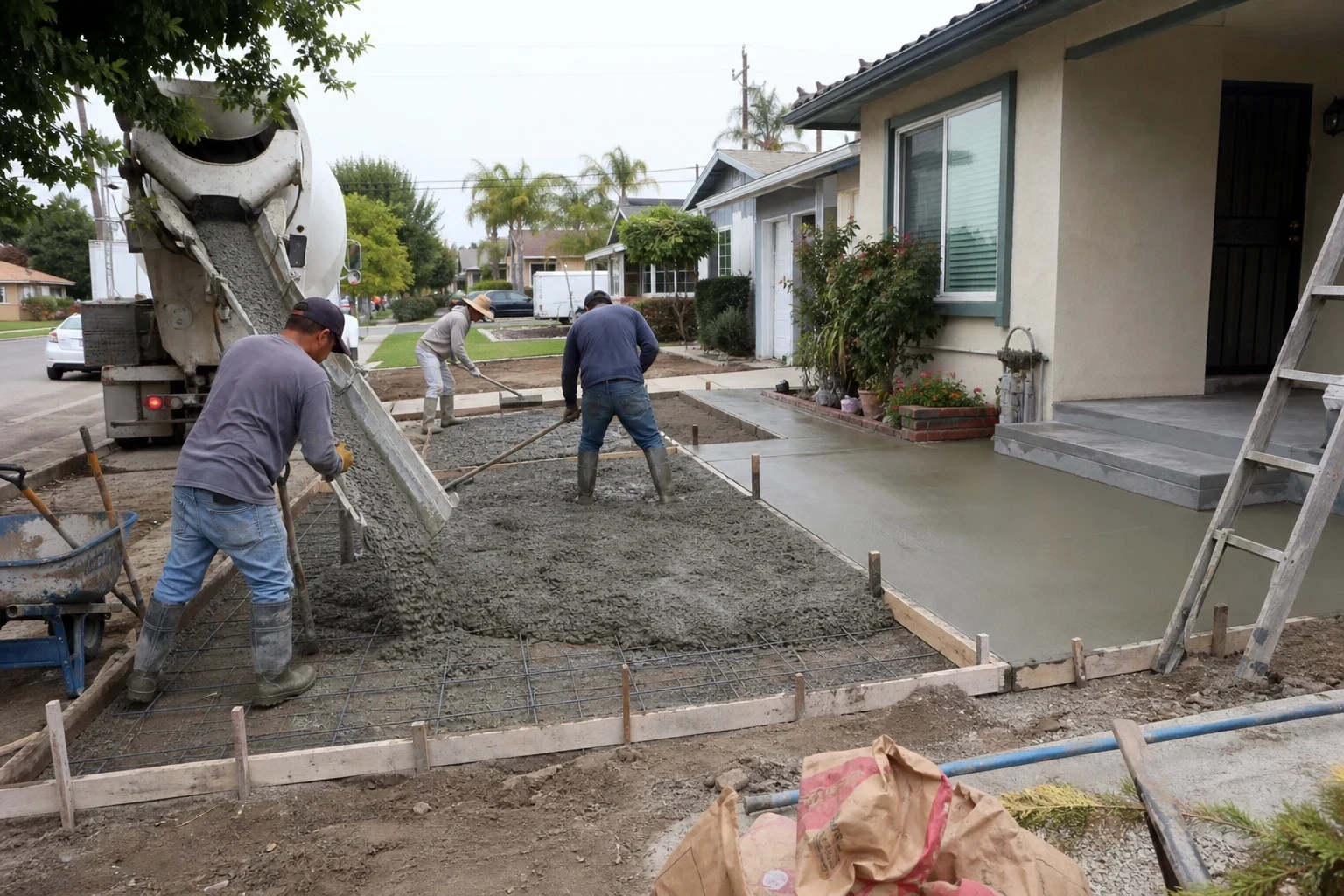
New courtyard slabs poured between your walls, with the slope, drains and finish worked out before the truck shows up.
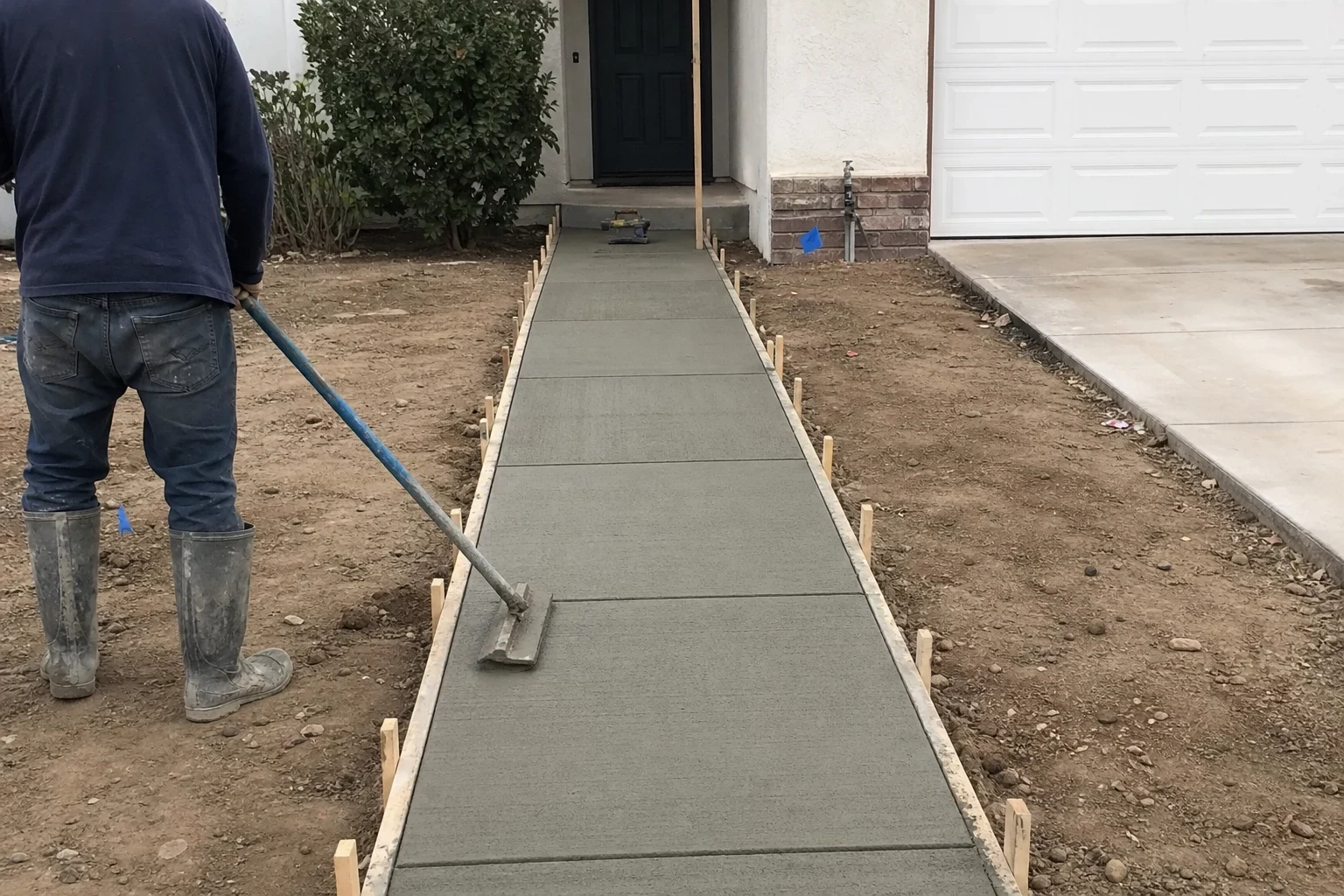
Walkways and Sidewalks
New concrete paths from the street, driveway or side gate to your door, set on a compacted base and sloped so water runs off, not toward your home.
A Concrete Company That Talks Straight
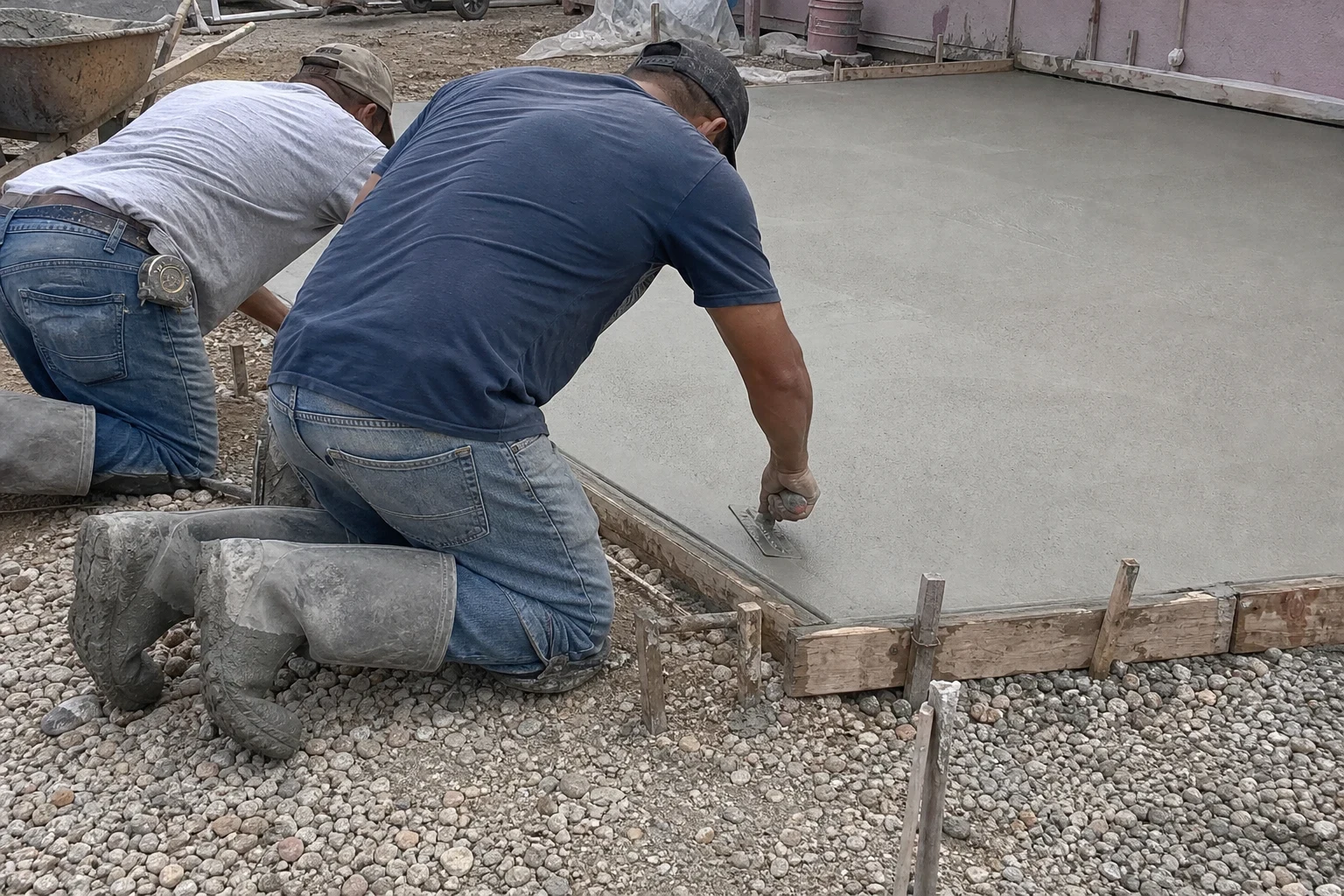
We are a concrete contractor based in Placentia, working on homes across the area. Our crews pour driveways, patios, pool decks and the rest of the flatwork around a house, and we do it the same way every time: proper base, the right thickness, joints in the right spots.
A lot of homeowners have been burned by a quick quote and a slab that cracked the next summer. We would rather take an extra ten minutes on your driveway talking through why we want a thicker base than leave you wondering what you paid for. If a cheaper option makes sense for your project, we will say so.
- License
- Licensed by the California State License Board (CSLB)
- Warranty
- 1-year warranty
What Moves the Price of a Concrete Job
Two driveways of the same size can cost very different amounts. The price comes from what it takes to build the slab right on your property, not just the square footage. Here is what we look at.
We measure on site and give you a written estimate with each part listed on its own line. If something changes once the old slab is out, we show you and talk it over before doing extra work.
- Size and thickness
- More square feet means more concrete, more forming and more labor. A driveway that carries cars or an RV pad needs a thicker slab than a garden walkway.
- Tear-out and haul-away
- If old concrete, asphalt or pavers have to come out first, that adds labor, equipment time and dump fees.
- Soil and base prep
- Many yards in north Orange County sit on clay that swells when wet and shrinks when dry. Soft or expansive soil may need extra excavation and more compacted base so the slab stays put.
- Access to the work area
- A wide-open front driveway is easy for a truck. A narrow side yard or a backyard behind the house may need a pump or wheelbarrows, which takes more time.
- Finish and color
- A broom finish is the simplest. Stamped patterns, integral color, exposed aggregate and decorative borders each add steps and material.
- Reinforcement and permits
- Rebar, dowels into existing slabs and city permits for driveway approaches or larger work all show up as separate lines on your estimate.
How a Job Runs, Start to Finish
Most residential pours follow the same path. Here is what to expect.
- 1
Site visit and walkthrough
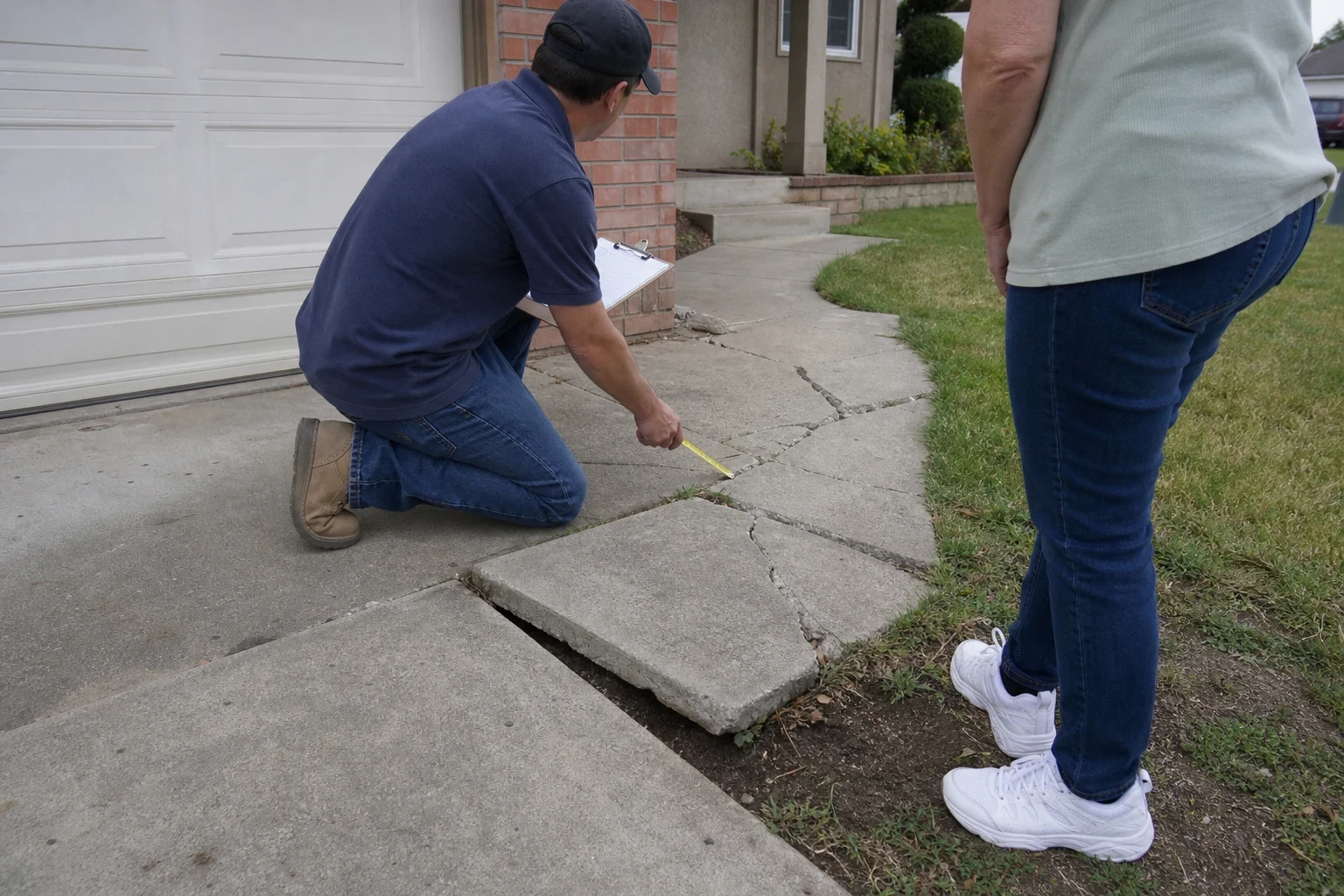
We come out, measure, check the soil and drainage, and listen to how you plan to use the space. You get straight answers about what will work and what will not.
- 2
Written estimate
We send a line-item estimate that spells out thickness, reinforcement, finish and any tear-out. If a permit is needed, we pull it.
- 3
Prep and forming
We remove old material, grade and compact the base, set forms and place the rebar or mesh. This is the part you will not see in the finished slab, and it matters most.
- 4
Pour and finish
The concrete goes in, gets leveled and finished, and control joints are cut. On hot days we time the pour and cure carefully so the surface does not dry too fast.
- 5
Cure, cleanup and walk-off
We clean up and walk the job with you. We tell you when it is safe to walk on, when you can drive on it, and how to care for it the first few weeks.
Questions Homeowners Ask Us
- Will my new concrete crack?
- All concrete shrinks as it cures, so some hairline cracking is normal. Our job is to control where it happens. We cut control joints at planned spacing, add reinforcement and build a solid base so cracks stay small and follow the joints instead of running across the middle of the slab.
- How long before I can walk or drive on it?
- You can usually walk on new concrete after a day or two. For cars, we typically say to wait about a week, and longer for heavy vehicles like RVs or trucks. Concrete keeps gaining strength for weeks, and we will give you dates specific to your pour.
- How thick should my driveway or patio be?
- Four inches is common for walkways and patios. Driveways that carry cars often go to four or five inches with rebar, and RV pads or spots for heavy trucks go thicker still. We look at what will sit on the slab and the soil under it, then put the thickness in writing on your estimate.
- What is the difference between stamped concrete and pavers?
- Stamped concrete is one continuous slab pressed with a pattern and colored while it is still wet. Pavers are separate pieces set on sand. Stamped concrete has no gaps for weeds and is a single surface, while pavers can be lifted individually. We can walk you through which suits your yard and how you use it.
- Do I need a permit for a driveway or patio?
- It depends on the work. A new driveway approach at the street, or changes that affect drainage, often need a city permit. Many backyard patios do not. We check the requirements for your address and pull the permit when one is needed.
- Can you pour concrete in hot weather?
- Yes. Summer pours are common around here. Heat makes concrete set faster, so we start early in the day, keep the timing tight and keep the surface damp while it cures. That helps stop the top from drying too quickly and getting fine surface cracks.
- Do I need to be home on pour day?
- Not the whole time. We need clear access to the work area and a water spigot, and we ask that cars are moved and pets stay inside. We do like to walk the finished job with you before we leave, so plan to be around at the end of the day if you can.
- How do I get a quote?
- Get your quote by phone. Tell us what you have in mind, and we will set up a time to look at the site, take measurements and then give you a written estimate.
Where We Work
We are based in Placentia and pour concrete for homeowners throughout the surrounding area. That includes Anaheim, Fullerton, Yorba Linda, Brea, Villa Park and Orange, along with Garden Grove, Buena Park, La Habra and Chino Hills.
- Placentia
- Anaheim
- Fullerton
- Yorba Linda
- Brea
- Villa Park
- Garden Grove
- Orange
- Buena Park
- Chino Hills
- La Habra
If your home is close by but not listed, ask when you reach us by phone. We can usually tell you right away whether we cover your street.
Ready to Talk About Your Project
Tell us what you want to build and what worries you about it. We will explain your options in plain words and set up a time to see the site.